How to Train Handyman Technicians to Sell Helpful Work Without Pressure: Handyman Technician Sales Training
Train handyman technicians to spot real needs, explain options clearly, and recommend useful work without pressure, scripts, or damage to customer trust.
By Lindsay Mega
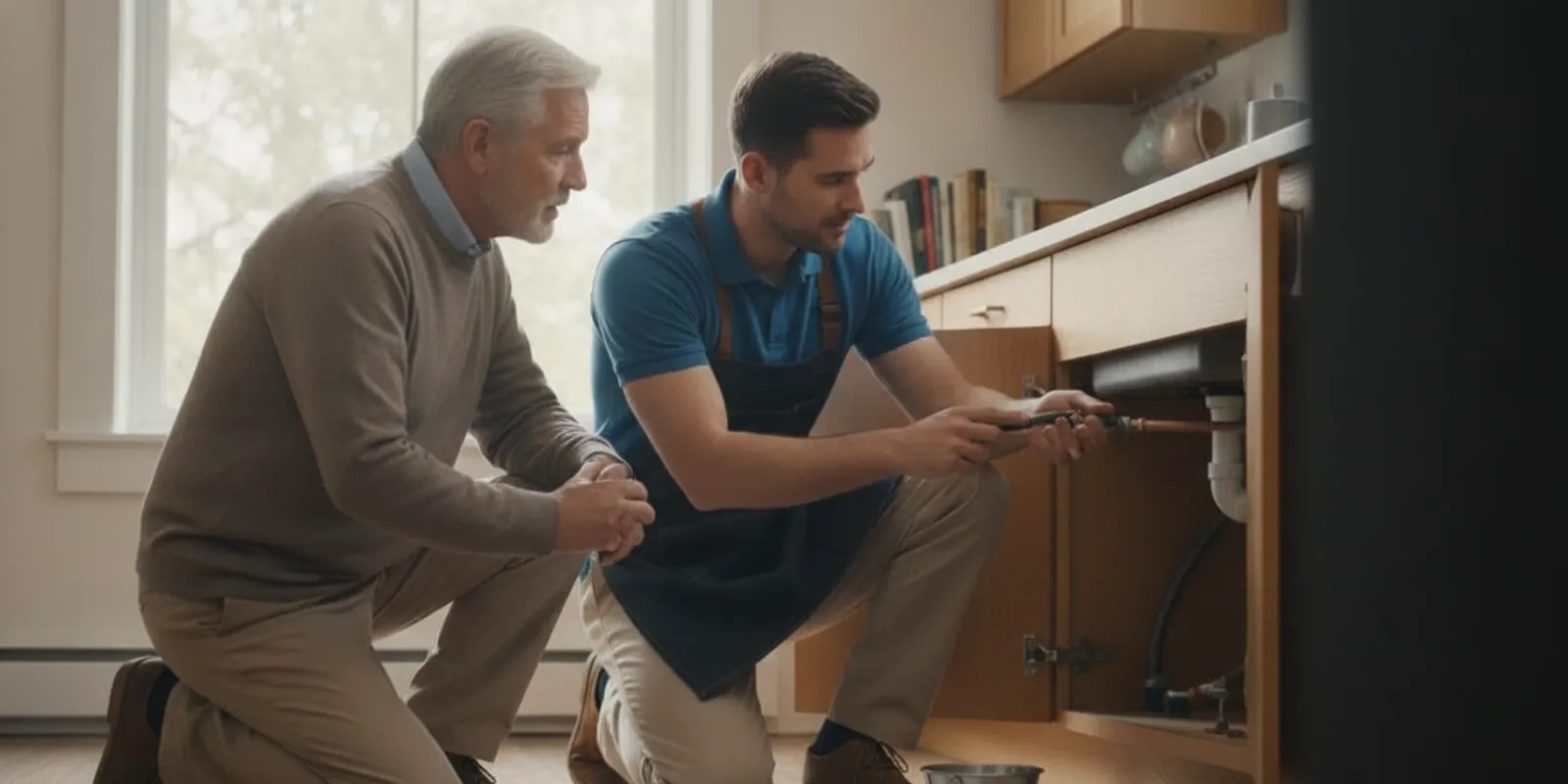
Good handyman technician sales training does not turn a skilled technician into a pushy salesperson. It teaches the technician to notice relevant needs, ask permission to discuss them, explain practical options, and let the customer decide. The result should be a clearer service conversation, not pressure to buy.
Book a free Revenue Strategy Call
What Should Technician Sales Training Actually Teach?
A technician is in a position to see conditions that a customer may not have noticed. That creates an opportunity to be helpful, but it also creates responsibility. Customers should be able to trust that a recommendation is relevant, explained honestly, and optional.
Training should build four habits:
- Observe: Notice a condition that is connected to the work or that may matter to the customer.
- Ask: Find out whether the customer wants to hear about it before launching into an explanation.
- Explain: Describe what was observed, why it may matter, and what choices are available in plain language.
- Confirm: Let the customer choose, ask questions, or decline without awkwardness.
This is different from telling technicians to “sell more.” A vague sales target can lead people to recommend work that is not a good fit, rush customers, or avoid conversations altogether. A clear behavior standard gives technicians a better path: identify actual needs and communicate them well.
For the owner, the distinction matters operationally. If every recommendation depends on individual instinct, one technician may explain options carefully while another says nothing or overstates the problem. A shared process makes customer conversations more consistent without requiring everyone to sound identical. The same principle applies to the business systems behind the field experience; TradeworX describes its approach to handyman business systems on its handyman business systems page.
How Can You Set the Right Boundary Between Service and Selling?
Set the boundary before training begins. Technicians should understand that their role is to share useful information and help the customer make an informed choice. They are not expected to manufacture urgency, diagnose beyond their training, or persuade someone who has already said no.
Write down a few non-negotiable rules and review them with the team:
- Recommend only work that relates to an observed condition, a stated customer goal, or a clearly explained option.
- Separate what you know from what you suspect. If a condition needs a closer assessment, say so.
- Do not present a preference as a safety requirement or imply damage will occur unless you can support that statement.
- Explain the scope and price through the business's approved estimating process. Do not invent a number or promise a discount.
- Give the customer room to think, compare options, or decline.
- Do not perform additional work without clear approval.
These standards protect the customer and the technician. They also help the owner coach based on observable conduct rather than personality. A technician who is naturally quiet can still follow a useful process; a charismatic technician still has to follow the same accuracy and approval rules.
For claims about what a service or repair will accomplish, set the expectation that explanations must be accurate and not misleading. The Federal Trade Commission provides consumer and business guidance at ftc.gov. Use your own legal or industry guidance where a question involves local licensing, code, warranties, or regulated work.
What Is a Simple Field Conversation Technicians Can Learn?
Give technicians a flexible sequence, not a word-for-word pitch. A useful conversation can be taught in five steps: connect the observation to the visit, ask permission, explain the facts, offer choices, and confirm the customer's decision.
1. Connect the observation to the visit
Make the reason for raising the issue clear. For example: “While I was replacing the faucet, I noticed moisture under the cabinet. Would you like me to show you what I found?” This is specific and gives the customer control over whether to continue.
Avoid vague openings such as “I found a big problem” when the technician has not established what the condition is. Alarm is not a substitute for evidence.
2. Ask permission to explain
A permission question makes the transition from repair work to an additional topic less abrupt. Examples include “Would it be helpful if I walked you through the options?” or “Do you want to hear what I noticed?” If the customer says no, acknowledge it and return to the agreed work.
3. Describe what is observable
Use concrete details. “The cabinet base is damp near the supply line” is more useful than “Your plumbing is in bad shape.” If a photo helps explain the condition, follow company policy and ask before taking or sharing it. Do not photograph private areas or store images outside the approved process.
4. Explain options and trade-offs
Where appropriate, describe the immediate scope, an alternative, and what happens if the customer chooses to wait. Be clear when the business cannot determine the full cause during the visit. A recommendation should help the customer compare choices, not funnel them toward the most expensive one.
5. Confirm what the customer wants
Close with a neutral question: “Would you like an estimate for that, or should we leave it for now?” Then confirm the decision and record any follow-up that the customer requested. A declined option is still a completed, professional conversation.
The exact language should fit the technician and the customer. Practice the sequence until it feels natural, while keeping the core order intact. Sales process and estimating support may be relevant to this work; TradeworX outlines its Revenue Engine and Hybrid Estimating System on separate service pages. The latter involves virtual estimators joining technicians on live job calls to help build and present estimates remotely; it is not a source of automatically supplied leads.
How Do You Train the Conversation Before It Reaches a Customer?
Do not rely on a meeting that ends with “just use good judgment.” Break the skill into short practice rounds. Demonstrate it, let technicians try it, give specific feedback, and repeat it in a low-stakes setting before expecting consistent field use.
- Explain the purpose. Tell the team that the goal is to help customers understand relevant options, not to sell a quota of add-on work.
- Model two versions. Show one clear, respectful conversation and one that feels rushed or exaggerated. Ask the team to identify the difference.
- Practice realistic scenarios. Use examples drawn from common service situations, with details changed to protect customer privacy.
- Rotate roles. One person plays the technician, another the customer, and a third observes. Switch roles so technicians experience how the conversation feels from both sides.
- Coach one behavior at a time. For one practice round, focus on permission. In another, focus on explaining options without overclaiming.
- Agree on the next step. Identify how the option will be estimated, approved, documented, and scheduled if the customer wants it.
Keep practice brief enough to repeat. A ten-minute exercise on one scenario can be more useful than an occasional lecture packed with rules. Ask each technician to paraphrase the customer’s choice at the end of a role-play. This checks whether the technician heard the answer rather than simply delivered a script.
Here is a sample role-play prompt: “You are completing a door adjustment. You notice the customer has also mentioned that the door sticks when it rains. Explain what you can confirm today, what you cannot confirm without more assessment, and how the customer can decide whether to request an estimate.” A good response does not need to claim a cause. It should make the limits of the observation clear.
Owners can also provide a short reference card with the conversation steps, approved estimating route, and escalation contacts. Keep it practical: technicians should be able to find the process quickly between jobs. TradeworX's Growth Accelerator page describes a handyman-focused implementation program that addresses sales and operating systems. Any training process should still be adapted to the company’s actual scope, policies, and applicable requirements.
Make practice more realistic by changing one detail at a time. In one scenario, the customer is in a hurry; in another, the customer asks whether a repair is urgent; in a third, the technician is unsure whether the condition falls within the approved scope. Have the observer note the exact words used to establish what is known, invite questions, and check the customer's decision. Then replay the scene with one improvement. This gives technicians usable alternatives instead of a general instruction to “sound confident.”
Which Training Methods Work Best in the Field?
Different methods solve different problems. A brief team huddle can introduce a standard, while observation and review show whether technicians can use it in real conditions. Mix practice methods instead of treating a slide deck or checklist as the whole training program.
| Training method | Best use | What the owner should look for |
|---|---|---|
| Demonstration and role-play | Teaching the steps and reducing uncertainty before a customer conversation | The technician asks permission, explains observable facts, and accepts a no |
| Ride-along or field observation | Seeing how the process works amid real job conditions | Respectful timing, clear explanation, and no interruption of agreed work |
| Job debrief | Reflecting on a completed interaction while details are fresh | What the customer asked, what options were explained, and what follow-up was agreed |
| Call or estimate review | Checking accuracy and consistency when the interaction is recorded or documented under company policy | Scope clarity, accurate language, customer approval, and correct handoff |
| One-on-one coaching | Addressing a specific skill gap or helping a strong technician refine the process | One behavior to practice next, supported by an example |
Field observation needs care. Explain to technicians what will be observed and why. Follow company privacy policies and get any required customer permissions. Avoid turning a ride-along into a surprise evaluation that makes employees feel watched but gives them no useful feedback.
After an interaction, ask open questions before offering advice: “What did you notice?” “How did you decide to bring it up?” “What choice did the customer make?” Then point to a specific moment. “You asked whether they wanted to hear the options before explaining them” is actionable. “Be better at selling” is not.
How Can Owners Coach Different Technicians Without Forcing a Script?
A repeatable process does not require identical personalities. Some technicians may be concise; others may explain more. The standard should define what a good conversation accomplishes, not prescribe every word.
Give technicians room to choose language that sounds natural, as long as they meet the same requirements:
- The observation is specific and relevant.
- The customer has a choice about hearing more.
- The explanation distinguishes facts from uncertainty.
- Options are presented without false urgency.
- The customer’s approval or decline is respected and recorded correctly.
When a technician avoids all recommendations, look for the obstacle before assuming a lack of effort. They may be unsure what is within scope, afraid of sounding pushy, unclear about pricing, or uncertain how to hand off an estimate. Training should address the actual gap. For a technician who overstates conditions or rushes the customer, pause independent recommendations until the owner has reviewed the behavior and reinforced the accuracy and approval standards.
It also helps to distinguish technical skill from communication skill. A technician may need additional technical guidance before discussing a condition. Another may understand the work but need practice explaining it plainly. Assign coaching to the right gap and make clear when a question must go to a supervisor or qualified specialist.
What Should a Technician Do When the Customer Says No?
Teach a simple, consistent response: acknowledge the decision, confirm the original job will continue as agreed, and record any requested follow-up. For example: “Of course. We’ll finish the repair we discussed. If you want to revisit the other option later, let us know.”
Do not reward repeated pressure after a customer declines. If there is a legitimate immediate safety issue, follow the company’s established safety and escalation procedure, explain only what can be supported, and document the conversation. Do not use safety language to make an optional improvement sound mandatory.
The owner should also make clear that a customer’s decision not to proceed is not a reason to reduce service quality, become cold, or create friction at payment. Trust includes how a team responds when the answer is no.
How Can You Measure Whether Training Is Working?
Track both the quality of the process and the business outcome. If the only measure is add-on revenue, technicians may feel pushed toward selling work regardless of fit. If the only measure is whether customers liked a technician, the owner may miss whether estimates and follow-up are being handled consistently.
Choose a small set of measures that match the training goal:
- Process adoption: Are relevant observations documented and options explained through the approved process?
- Estimate follow-through: When a customer requests an estimate, is it prepared and delivered as promised?
- Customer choice: Are approvals and declines recorded accurately, without treating a decline as a failed interaction?
- Quality signals: Are complaints, misunderstandings, rework, or disputed scope connected to how options were presented?
- Sales outcomes: Are estimates accepted at a sustainable rate, viewed alongside scope, customer feedback, and delivery quality?
Review patterns over a sensible period rather than reacting to one job. Compare like with like where possible; service types, customer needs, and estimate sizes differ. Use the information to identify a coaching question, not to assume that a technician caused every outcome. If recommendations are rarely converted, the cause might be unclear options, slow estimate follow-up, pricing confusion, or a mismatch between the customer's need and the proposed work.
Before collecting or reviewing customer recordings, photos, or messages, follow company policies and applicable consent and privacy requirements. Make the purpose of measurement clear to employees. The point is to improve a useful customer process, not to create a surveillance exercise.
Owners looking at broader process gaps can use the free Handyman Business Analysis as a starting point for reviewing business areas. TradeworX also describes services for handyman businesses, including implementation and support options. Those resources do not replace the owner’s responsibility to set clear job scopes, customer approval standards, and training expectations.
How Can You Roll Out the Training in a Growing Handyman Business?
Start with a limited rollout rather than announcing a new sales initiative and expecting immediate consistency. Choose one common situation, teach the conversation, practice it, and review how it works. Then adjust the language and process before expanding to other situations.
- Choose a narrow starting point. Pick one type of customer question or relevant additional work that technicians encounter regularly.
- Define the approved scope. Clarify what technicians can observe, explain, estimate, and approve, and what needs a supervisor.
- Set the handoff. Decide who prepares estimates, how the customer receives them, and how follow-up is recorded.
- Train and practice. Use demonstrations and role-play before field use. Invite technicians to point out wording that feels unnatural or unclear.
- Review examples. Debrief a few interactions, including a customer who declined. Look for accuracy and respect, not just whether work was sold.
- Refine and expand. Correct confusion in the system, then train on another scenario once the first is stable.
This approach is especially useful when the owner is no longer present for every customer interaction. Document the process so new team members can learn it and experienced technicians can refer to the same standard. Good systems support the technician; they should not make the customer feel processed.
Make the rollout useful for dispatch and estimating as well as the technician. For example, agree on a brief job note that captures the observed condition, the customer's question, whether an estimate was requested, and the agreed follow-up owner. A manager can then spot a stalled handoff without asking the technician to repeat the pitch. After the first few weeks, review a small sample of notes and customer outcomes with the team. If the record is too long to complete between jobs, simplify it; the goal is dependable information, not paperwork for its own sake.
Book a free Revenue Strategy Call
Frequently Asked Questions About Handyman Technician Sales Training
Should technicians have a sales quota?
A quota focused only on sold add-on work can create pressure to recommend poorly matched services. If you track sales outcomes, pair them with measures of accurate explanations, customer choice, estimate follow-through, and quality. Set expectations that reinforce the customer’s best interest and your approved process.
How do you train a technician who is uncomfortable selling?
Start by reframing the task as explaining an observed condition and available options. Practice permission-based language and make it acceptable for a customer to decline. Also check for practical barriers, such as unclear pricing, scope limits, or uncertainty about who prepares the estimate.
Should every technician offer every possible service?
No. A technician should raise relevant options that are within the company’s scope and supported by what they can observe or assess. The business should define which issues require a supervisor, a specialist, or a separate evaluation.
How often should technicians practice?
Practice when a process is introduced, when the team sees a recurring communication problem, and when new technicians join. Short, repeated role-play and job debriefs can keep the skill active without making every meeting a sales seminar.
How can a technician recommend work without sounding pushy?
Be specific about the observation, ask whether the customer wants an explanation, describe options accurately, and accept the answer. The customer should understand what is known, what is uncertain, and what happens next.
Build a Customer-First Process the Team Can Repeat
Technicians do not need to become salespeople to communicate useful work. They need a clear boundary, a practical conversation sequence, opportunities to practice, and a consistent way to estimate, document, and follow through. Train and measure those behaviors, and the business can make customer conversations more dependable without making pressure part of the job.
Book a free Revenue Strategy Call
When the process is clear, technicians can focus on the work and customers can make informed decisions with confidence.